
Wrinkles, fine lines and looser-looking skin are common changes associated with ageing. If you’re considering a non-surgical treatment, it’s important to understand what different options may and may not be able to achieve.
RF microneedling is one treatment that has been studied for facial ageing, including the appearance of wrinkles, skin texture and skin laxity. Results are individual and can be influenced by your skin, the treatment area, the device and how the treatment is carried out.
Why do wrinkles and skin laxity develop?
Ageing skin is affected by several factors rather than a single cause.
Over time, changes in collagen and elastin, cumulative sun exposure, genetics and other environmental factors can contribute to changes in firmness, elasticity and texture. UV exposure is particularly important because it contributes to photoageing and wrinkle development.
It is also useful to distinguish between different concerns.
- Fine lines are usually smaller creases that may become more noticeable with facial movement or changes in skin hydration.
- Wrinkles can deepen and become more established over time.
- Skin laxity is different again. It refers to skin that has become less firm or elastic, which may contribute to a softer jawline, looser cheeks or changes around the neck.
Because these concerns aren’t identical, no single treatment is automatically “best” for everyone.
What is RF microneedling?
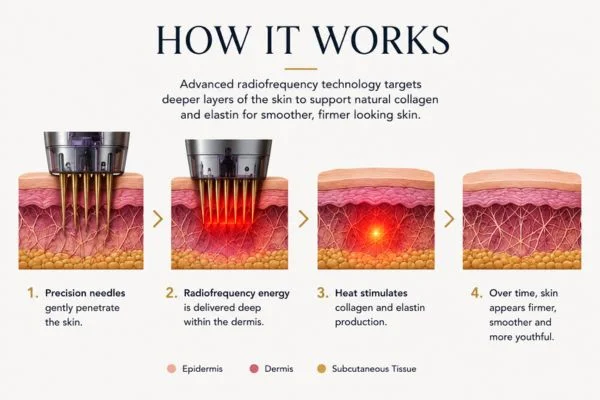
RF microneedling combines two technologies.
Microneedling uses very small needles to create controlled micro-injuries in the skin. The treatment device then delivers radiofrequency energy, creating heat at selected depths.
RF microneedling delivers radiofrequency energy at selected depths within the skin. Clinical research has reported changes in skin texture, firmness and wrinkle appearance following treatment, although outcomes are not the same for everyone.
However, it is important not to confuse a biological mechanism with a guaranteed cosmetic result.
Your skin’s response will depend on factors including your individual skin, the area treated, treatment settings and your starting level of laxity.
Can RF microneedling help wrinkles and loose skin?
It may suit people concerned about several signs of skin ageing, including fine lines, wrinkles, uneven texture, and some degrees of skin laxity.
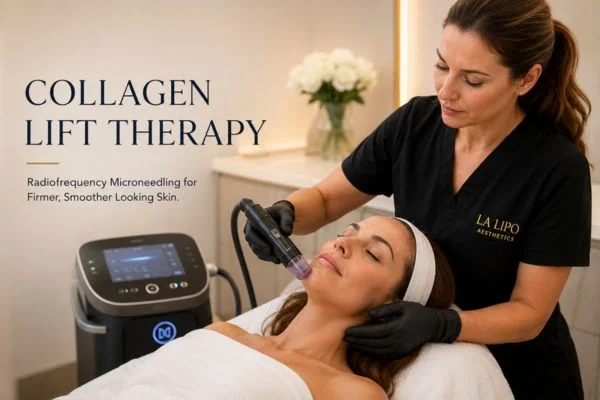
LA LIPO’s Collagen Lift Therapy combines RF microneedling and may be an option for people concerned about skin texture, fine lines, wrinkles or mild loss of firmness. Suitability should be assessed during a consultation.
The important word is may.
A non-surgical treatment should not be presented as a guaranteed way to remove wrinkles or dramatically lift sagging skin.
Someone with early changes in skin laxity may have very different expectations from someone with substantial excess skin.
That distinction is important when deciding whether treatment is worthwhile.
What happens during treatment?
Your consultation should come before treatment.
This allows you to discuss what you want to improve, your medical history, previous treatments and your expectations. Your practitioner should also explain what the treatment involves, possible risks, aftercare, and the type of improvement you can realistically expect.
Before going ahead, it is worth asking:
- Which areas would you recommend treating?
- What makes this treatment suitable for my skin concerns?
- What kind of improvement should I realistically expect?
- How many treatments are likely to be needed?
- How much recovery time will I need?
- What side effects or reactions should I be aware of?
- If I choose not to have the treatment, are there other options I could consider?
During treatment, the device is moved over the areas being treated. Microneedling can cause discomfort, and topical anaesthetic may be used depending on the treatment protocol. Read: Why Your Skin Loses Firmness After 40 (And What You Can Do About It)
Is there downtime?
RF microneedling is not completely downtime-free.
Temporary redness, swelling, sensitivity and other short-term skin reactions can occur following treatment. The level and duration of these effects can vary depending on the individual, treatment area and treatment settings.
More significant complications have also been reported with certain uses of RF microneedling, including burns, scarring, changes to fat tissue and nerve injury. This is one reason appropriate patient assessment, treatment settings and practitioner training are important.
Your practitioner should talk you through the potential risks and explain the aftercare you will need before proceeding. You should also receive clear instructions about skincare and sun exposure following your appointment.
When will you see results?
One reason people choose collagen-stimulating treatments is that improvement generally doesn’t happen like an instant facelift.
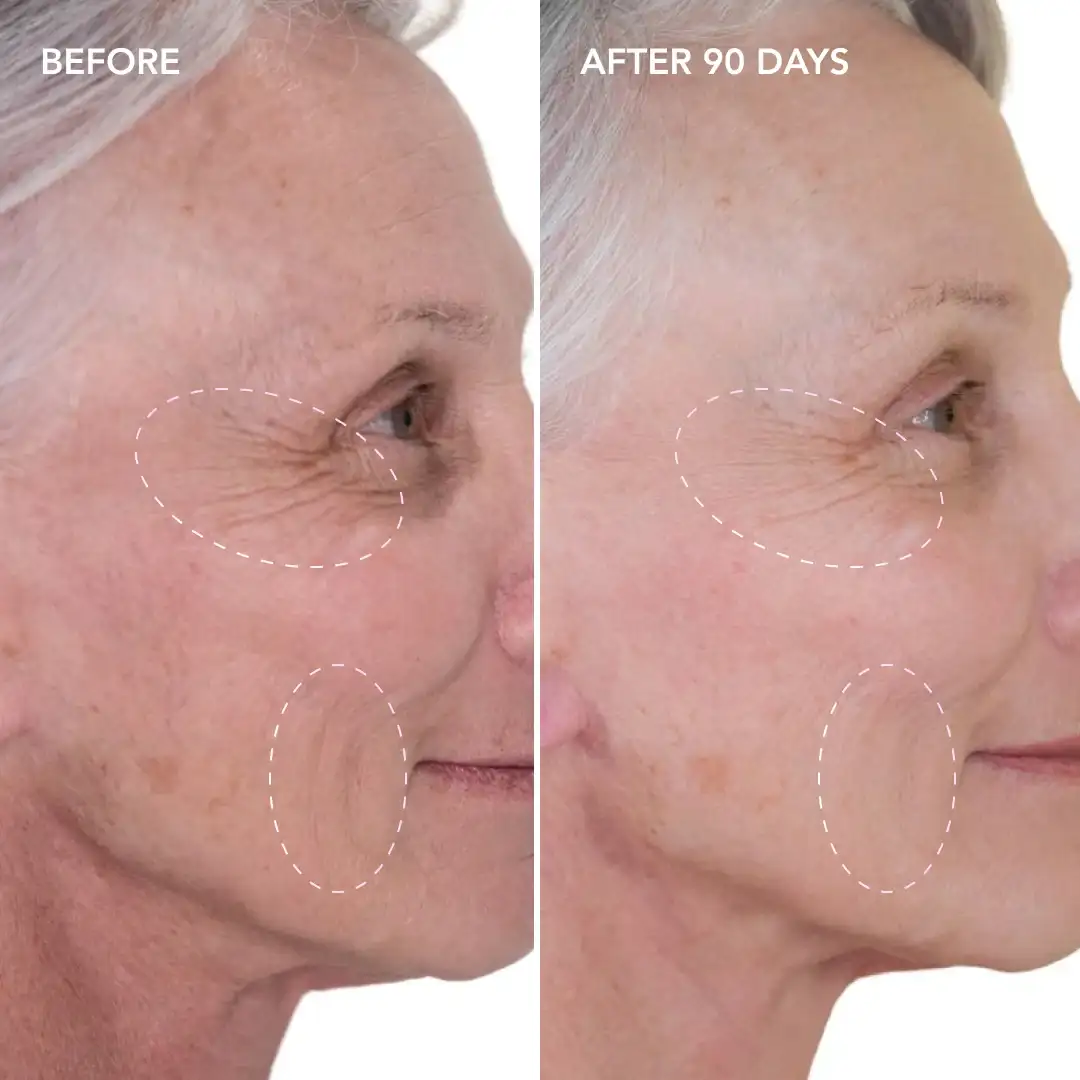
Results from RF microneedling are not usually immediate. Studies have found that changes can continue to develop over the weeks and months following treatment. [1]
However, no universal timetable applies to everyone.
Your result can depend on your skin, the treatment protocol, the degree of laxity and your individual response.
A good consultation should therefore focus on realistic improvement rather than promising a particular result.
What can RF microneedling not do?
This is one of the most important questions to ask.
RF microneedling may improve the appearance of skin, but it cannot reproduce everything that surgery can achieve.
It should not be presented as a replacement for a surgical facelift in someone with significant excess skin.
It may also be inappropriate if the main concern is something other than skin quality or laxity. For example, changes caused primarily by significant volume loss may require a different assessment.
A consultation should determine whether one treatment is appropriate or whether another approach makes more sense.
Who may not be suitable?
Not everyone is automatically suitable for microneedling or RF microneedling.
Medical history, active skin problems, healing issues, bleeding or clotting problems, certain medications, and other individual factors can affect suitability.
This is why a proper assessment matters.
You should also tell the practitioner about previous cosmetic procedures and any relevant medical conditions or medicines.
What are the risks of RF microneedling?
Like any cosmetic procedure, RF microneedling carries potential risks and side effects.
Common short-term reactions may include redness, swelling, sensitivity and discomfort. Depending on the treatment and individual response, other reactions can occur.
The FDA has also warned about reports of more serious complications associated with certain uses of RF microneedling, including burns, scarring, fat loss, disfigurement and nerve damage. [3]
Your practitioner should assess your suitability before treatment and explain the potential benefits, limitations, risks and aftercare requirements so that you can make an informed decision.
When should you see a doctor instead?
Not every skin change is simply an aesthetic concern.
If you have a new or changing mole, or an area of skin that is changing in size, shape, or colour; bleeding; itching; or becoming crusty, the NHS advises seeking medical assessment rather than treating it cosmetically. [4]
Cosmetic treatment should never delay investigation of a potentially significant skin condition.
Is RF microneedling the right non-surgical treatment for you?
There isn’t one non-surgical treatment that is automatically best for everyone with wrinkles, fine lines or skin laxity.
RF microneedling is one option that may be appropriate for some people, particularly where concerns include skin texture, fine lines, wrinkles or some loss of firmness.
Whether it is suitable for you depends on factors such as your skin, the area being treated, your expectations, medical history and the degree of skin laxity.
A consultation can help determine whether RF microneedling is an appropriate option or whether another approach may be more suitable.
Frequently Asked Questions
Q: Is RF microneedling Greater London (Haringey) good for wrinkles?
RF microneedling may help improve the appearance of wrinkles, fine lines and skin laxity in suitable individuals. Research supports its use for aspects of facial ageing, but results vary. It is better viewed as a treatment that can improve the appearance of the skin rather than one that completely removes wrinkles. [1][2]
Q: Does RF microneedling tighten loose skin Greater London (Haringey)?
It may improve the appearance of skin firmness and laxity in suitable people. However, it cannot remove substantial excess skin in the way surgery can.
Q: Is RF microneedling painful?
The treatment can cause discomfort. Whether topical anaesthetic is used depends on the treatment protocol. Your practitioner should explain what you are likely to feel before treatment.
Q: When might I notice results from RF microneedling?
It is normal not to see the full effect straight away. The changes associated with RF microneedling can develop gradually over the weeks and months after treatment. How quickly you notice a difference depends on your skin, the area treated, and how your skin responds, so there is no single timeframe that applies to everyone.
Q: How many RF microneedling Greater London (Haringey) treatments will I need?
No single number applies to everyone. The recommended course depends on your skin, treatment area, concerns and treatment protocol. A consultation should establish what is appropriate for you.
Q: Can RF microneedling replace a facelift?
No. RF microneedling and facelift surgery are very different procedures. Non-surgical treatment may be appropriate for some degrees of skin laxity, but it cannot reproduce the changes possible with surgery.
Q: Can everyone have RF microneedling?
No. Certain medical conditions, medications, skin problems and other factors can affect suitability. A proper consultation and medical screening are important before treatment.
Q: Should I treat a changing mole with a cosmetic treatment?
No. A new or changing mole, or an unusual skin lesion, should be medically assessed first. The NHS recommends seeing a GP for changes such as altered size, shape, or colour; bleeding; itching; or crusting.
REFERENCES & FURTHER READING
[1] Kumar et al. (2026). Systematic review of radiofrequency microneedling for facial rejuvenation.
[2] Wang et al. (2025). Scoping review of radiofrequency microneedling and its clinical applications.
[3] U.S. Food and Drug Administration (FDA). (2025). Safety Communication: Risks associated with certain uses of radiofrequency microneedling devices.
[4] NHS. Melanoma – Symptoms.
[5] Advertising Standards Authority / CAP. Cosmetic interventions: Non-surgical procedures.
For Further Information, Please Call Us ON 03300 100 238