Cherry Angiomas Greater London (Haringey) and Ageing: Understanding the Link
Have you spotted a few small red marks on your skin that weren’t there a few years ago? Perhaps you’ve noticed them across your chest, stomach or arms. They might be cherry angiomas, a common type of skin growth that becomes more noticeable as we get older.
Although cherry angiomas are usually harmless, it’s understandable to wonder why they appear, whether they’ll keep developing, and whether anything can be done about them.
In this guide, we’ll explore the link between cherry angiomas and ageing, what we know about their causes, and when it might be worth having a skin mark checked.
What Are Cherry Angiomas?

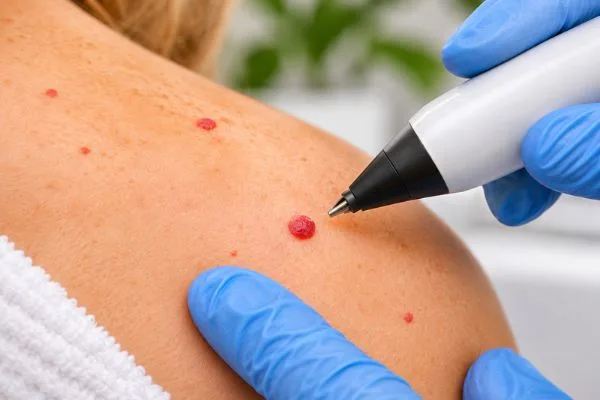
Cherry angiomas are small, benign growths made up of tiny blood vessels. They’re sometimes called Campbell de Morgan spots and often look like little red dots on or just above the skin’s surface.
Their appearance can vary. Some are flat, while others are slightly raised and rounded. They may be bright red, dark red, or purple, and can vary in size.
You’ll often find them on the torso, particularly the chest and back, although they can develop elsewhere.
One person might have just a couple, while another may notice quite a few scattered across their skin.
Cherry angiomas are generally painless and don’t require removal when they’re clearly diagnosed and aren’t causing problems.
However, not every red or purple skin mark is a cherry angioma. A healthcare professional should assess any lesion that hasn’t been confidently identified.
Why Do Cherry Angiomas Become More Common With Age?
It’s common to notice more cherry angiomas as you get older.
They can develop in younger adults and occasionally in children, but their numbers tend to increase from middle age onwards.
The connection with ageing is well recognised, although researchers haven’t established exactly why these growths become more common.
Cherry angiomas involve a localised growth of small blood vessels within the skin. Research has identified genetic changes in some of these growths, but that doesn’t fully explain why they develop or why certain people have more than others.
Importantly, finding a cherry angioma doesn’t mean your skin is unhealthy or that you’re ageing unusually quickly.
They’re simply a common skin finding, particularly in adults.
What Causes Cherry Angiomas to Develop?
No single confirmed cause explains every cherry angioma.
Researchers have investigated several possible influences, but it’s important to distinguish established associations from theories that are still being studied.
1. Getting Older
Age is one of the clearest associations.
Some people first notice cherry angiomas in their twenties or thirties, while others don’t develop noticeable numbers until much later.
There’s no set age when they begin to appear, and not everyone develops the same number.
2. Genetics and Family History
Family history may play a part in why some people develop more cherry angiomas than others. It’s not unusual for several members of the same family to have these small red spots, although the exact role of genetics is still being studied. Researchers have also identified certain genetic changes within cherry angiomas themselves. However, these findings don’t mean that everyone with a family history will develop them.
3. Hormonal Changes
Cherry angiomas have sometimes been observed during pregnancy, prompting research into possible hormonal influences.
However, there isn’t enough evidence to say that ordinary hormonal changes, menopause or falling oestrogen levels directly cause cherry angiomas.
4. Sun Exposure and Environmental Factors
We know that spending too much time in the sun can damage our skin, but whether it relates to cherry angiomas is less clear.
Researchers have also investigated environmental factors, but they have yet to establish a direct link between sun exposure and the development of these small red spots. Protecting your skin from excessive ultraviolet exposure remains important for overall skin health, whether or not you have cherry angiomas.
Are Cherry Angiomas Dangerous?
A confirmed cherry angioma is benign, meaning it isn’t cancerous.
Most remain harmless and don’t need treatment.
The difficulty is that other skin conditions can occasionally resemble a cherry angioma, particularly when a growth is dark, unusual in shape or changing in appearance.
For this reason, don’t assume every new red spot is harmless just because it looks like one you’ve had before.
When Should You Have a Skin Mark Checked?
Arrange an assessment with your GP or an appropriate healthcare professional if a skin mark:
- Changes noticeably in size, shape or colour
- Starts bleeding without an obvious injury
- Develops a sore that doesn’t heal
- Becomes persistently painful or irritated
- Looks different from your other skin marks
- Appears unusual or cannot be confidently identified
A sudden appearance of numerous new skin growths is also worth discussing with a healthcare professional.
These changes don’t automatically mean something serious is wrong, but it’s better to establish what you’re dealing with before considering cosmetic treatment.
Do Cherry Angiomas Go Away on Their Own?
Most cherry angiomas remain on the skin once they’ve developed.
Some may change slightly in appearance over time, while others stay much the same for years.
It’s also possible to develop additional cherry angiomas as you get older.
No proven skincare product or home remedy reliably removes them.
Trying to cut, squeeze, burn or freeze a suspected cherry angioma yourself can cause bleeding, infection and scarring.
If a confirmed cherry angioma is bothering you cosmetically, professional removal may be an option.
Can Cherry Angiomas Be Removed?
Yes, procedures can remove cherry angiomas for cosmetic reasons.
Because these growths are usually harmless, removal is generally a personal choice rather than a medical necessity.
The best method depends on the lesion’s size, location, appearance, and confirmed diagnosis.
Cryotherapy for Cherry Angiomas
Cryotherapy uses very low temperatures to damage targeted tissue.
At LA LIPO, we offer CryoPen cryotherapy for selected, previously identified benign skin lesions, including suitable cherry angiomas.
The treatment involves applying controlled cooling to the targeted area. The treated tissue may subsequently form a scab as the skin heals.
However, not every cherry angioma is suitable for freezing, and treatment doesn’t guarantee complete removal or a particular cosmetic result.
A consultation is needed to consider the lesion, the treatment area, relevant medical history and whether the proposed procedure is appropriate.
If the diagnosis is uncertain, medical assessment should take place before any cosmetic removal.
Other Methods of Cherry Angioma Removal
Other procedures used by appropriately trained healthcare professionals include vascular laser treatment and electrosurgery.
These methods work differently from cryotherapy and have their own benefits, limitations and risks.
The choice of treatment should be based on the individual lesion and a suitable professional assessment.
What Are the Risks of Cherry Angioma Removal?
Even when a skin lesion has been confirmed as benign, cosmetic removal carries potential risks.
With cryotherapy, these may include:
- Pain, stinging or tenderness during or after treatment
- Redness and swelling
- Blistering or scab formation
- Changes in skin pigmentation, including lighter or darker patches
- Infection or skin taking longer than expected to heal.
- Scarring around the treated area
- The cherry angioma not being fully removed, meaning another treatment may be needed.
Some people may also notice that the treated skin becomes lighter or darker than the surrounding area. These changes can be more noticeable on darker skin tones and, in some cases, may be permanent.
There may also be a risk of bleeding or an unsatisfactory cosmetic result.
Your practitioner should explain the potential complications, expected healing process and aftercare requirements before treatment.
Cryotherapy is not appropriate for every person or every lesion.
Can You Prevent Cherry Angiomas From Appearing?
Unfortunately, there’s no proven way to prevent cherry angiomas from developing.
Because the precise causes aren’t fully understood, no particular skincare routine, diet, or supplement has been shown to stop them from appearing.
General skin care is still worthwhile.
Protecting your skin from excessive sun exposure, avoiding unnecessary irritation and keeping an eye on changes in existing marks can all form part of looking after your skin.
But developing cherry angiomas doesn’t necessarily mean you’ve done anything wrong or neglected your skin.
Frequently Asked Questions About Cherry Angiomas and Ageing
1. At what age do cherry angiomas usually appear?
Cherry angiomas can develop at different ages, although they become increasingly common from middle age onward.
Some people notice their first spots in early adulthood, while others develop them later in life.
2. Why am I suddenly getting more cherry angiomas?
The number of cherry angiomas can increase with age, but the exact reason isn’t always clear.
If you’ve noticed a sudden increase in skin growths, especially if they look unusual, arrange a medical assessment rather than assuming they’re all cherry angiomas.
3. Are cherry angiomas a sign of skin cancer?
Cherry angiomas themselves are benign and aren’t considered skin cancer.
However, some other skin lesions can resemble them. An appropriate healthcare professional should assess any uncertain, changing or unexplained bleeding growth.
4. Can menopause cause cherry angiomas?
There isn’t sufficient evidence to establish menopause as a direct cause of cherry angiomas.
Although hormonal influences have been investigated, ageing remains a more clearly recognised association.
5. Can cherry angiomas be removed without surgery?
Some cherry angiomas can be treated using procedures such as cryotherapy or vascular laser treatment.
These are still cosmetic procedures with potential complications, and suitability needs to be assessed on a case-by-case basis.
6. Will a cherry angioma grow back after removal?
A treated lesion may not be completely removed, and recurrence is possible.
You may also develop new cherry angiomas elsewhere on your skin over time.
No treatment can guarantee that further cherry angiomas won’t appear.
7. Is CryoPen suitable for every cherry angioma?
No. Suitability depends on factors such as the lesion’s diagnosis, size, location, skin characteristics and relevant medical history.
Some lesions may require a different approach or medical assessment rather than cosmetic cryotherapy.
8. Do cherry angiomas need to be removed?
Usually not.
If a cherry angioma has been confidently diagnosed and isn’t causing problems, leaving it alone is generally a reasonable option.
Removal may be considered for cosmetic reasons after discussing the potential risks and limitations.
Understanding Cherry Angiomas as Your Skin Changes
Finding new marks on your skin can be unsettling, particularly when you don’t remember seeing them before.
Cherry angiomas are one of several common skin changes associated with getting older. Most are harmless, and many people choose to leave them exactly as they are.
The important thing is knowing what you’re looking at. If a mark is new, changing, or hasn’t been identified, get it checked before considering removal.
For those interested in cosmetic treatment of a confirmed benign cherry angioma, LA LIPO provides information about its Cherry Angioma Removal service, including CryoPen cryotherapy and treatment suitability.
A consultation can help establish whether cosmetic cryotherapy is an appropriate option and provide an opportunity to discuss the possible benefits, limitations and risks.
Important information: This article provides general information about cherry angiomas and cosmetic treatment options. It cannot diagnose a skin lesion or replace medical advice. Uncertain, suspicious or changing lesions should be medically assessed before cosmetic removal. Cryotherapy carries risks, including pain, blistering, infection, pigmentation changes, scarring and incomplete removal. Individual outcomes vary, and no specific cosmetic result can be guaranteed.